
Expanding Access to Mental Health Through Digital Technologies in Low Resource Settings : A Compendium of Implementation Lessons and Case Studies
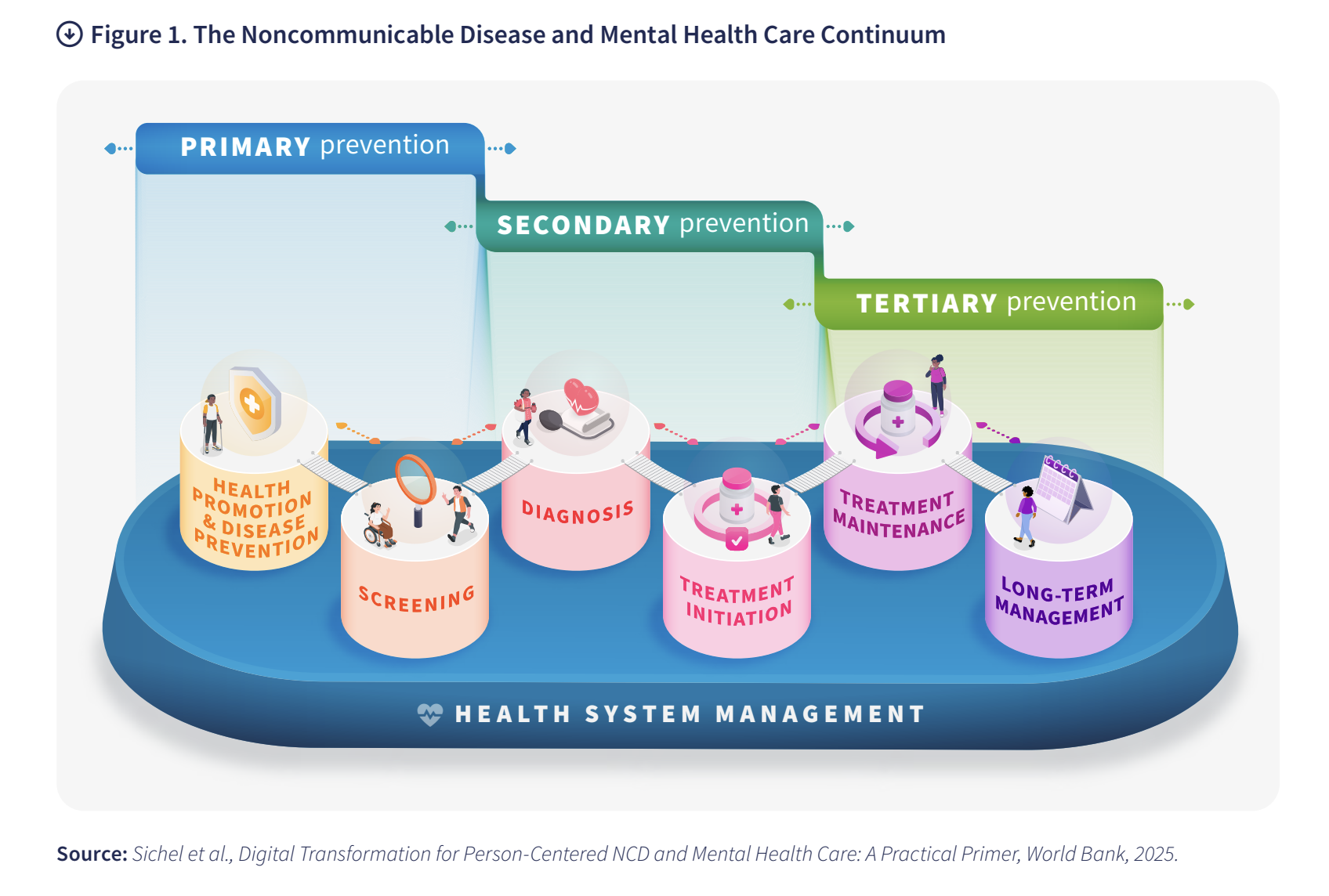
This report examines how digital technologies can expand access to mental health services in low-resource settings, where significant treatment gaps persist due to limited funding, workforce shortages, stigma, and inadequate service availability. It explores the role of digital interventions across the mental health care continuum, including prevention, screening, diagnosis, treatment, and long-term support. Through global case studies and implementation examples, the report highlights the use of tools such as telehealth, AI-enabled applications, chatbots, electronic health records, digital referrals, clinical decision-support systems, mobile counseling platforms, and community-based digital solutions. It emphasizes the importance of user-centered design, data privacy, interoperability, responsible AI use, and alignment with national health strategies to ensure safe and sustainable implementation. The report provides practical lessons and recommendations for governments, health providers, and development partners seeking to leverage digital innovation to improve mental health outcomes, strengthen health systems, and advance equitable access to quality mental health care.
Page 19, AI Enabled Care:
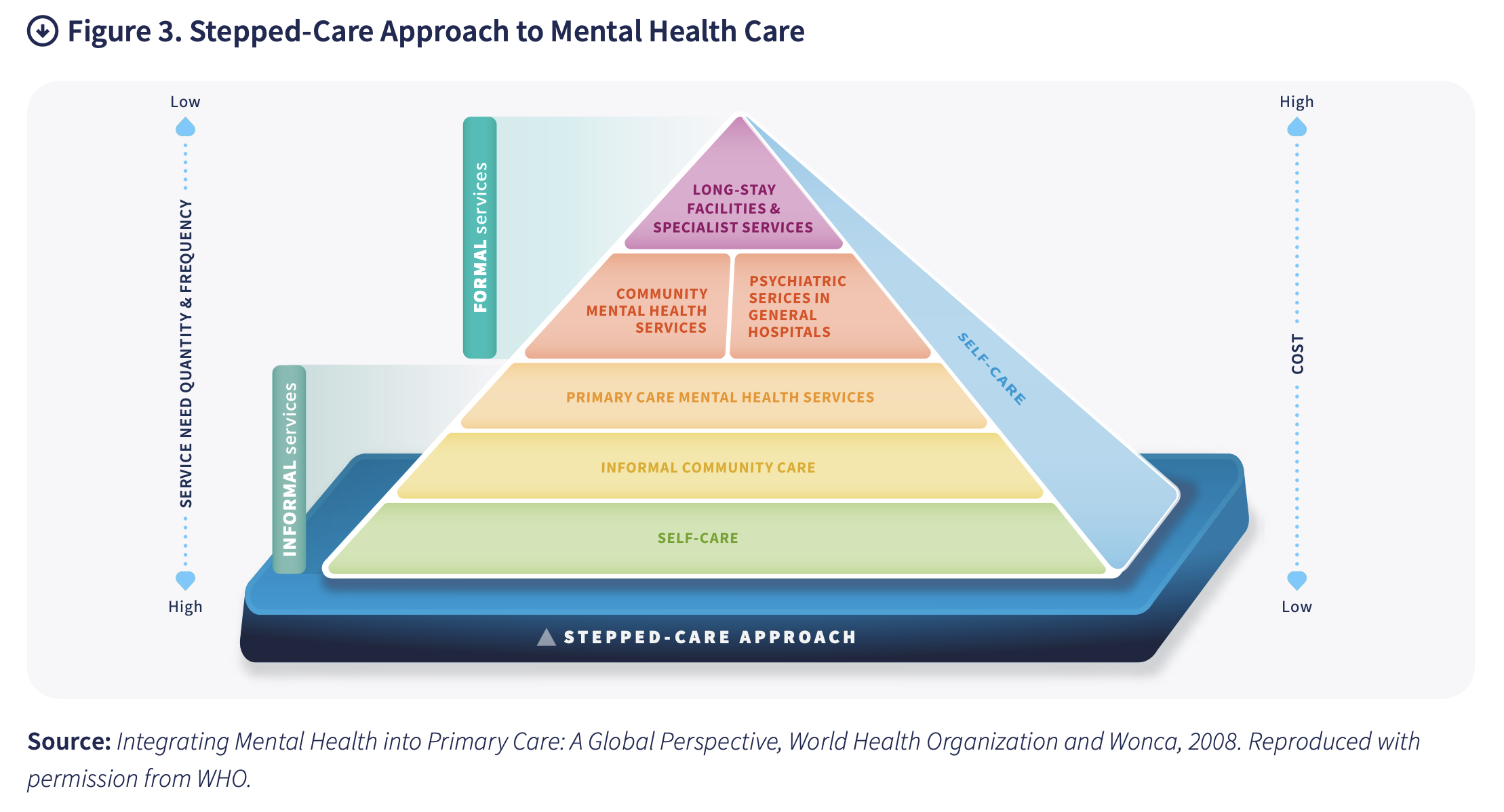
A significant amount of data can be mined through interactions on AI-enabled platforms. AI can analyze data sets to give countries a clearer picture of the mental health conditions that different population groups face, including by gender, age, geography, and income level—a level of disaggregation often missing from national data. This is particularly valuable given that collecting comprehensive national and subnational mental health data is challenging: Many people do not seek formal care due to stigma, and mental health research remains chronically underfunded. AI can help close this gap by stratifying mental health conditions within platforms that people are already motivated to use. Audere Africa, for example, embeds AI-driven mental health stratification within an integrated self-care platform spanning HIV, GBV, and broader wellbeing to overcome the stigma and self-identification barriers that limit uptake of stand-alone mental health interventions while leveraging LLMs to deliver contextually appropriate, personalized support at scale. It is crucial, though, that data be anonymized and that national data privacy and protection laws are followed.